Collecting cattail for VISION experiments
Collecting cattail for VISION experiments
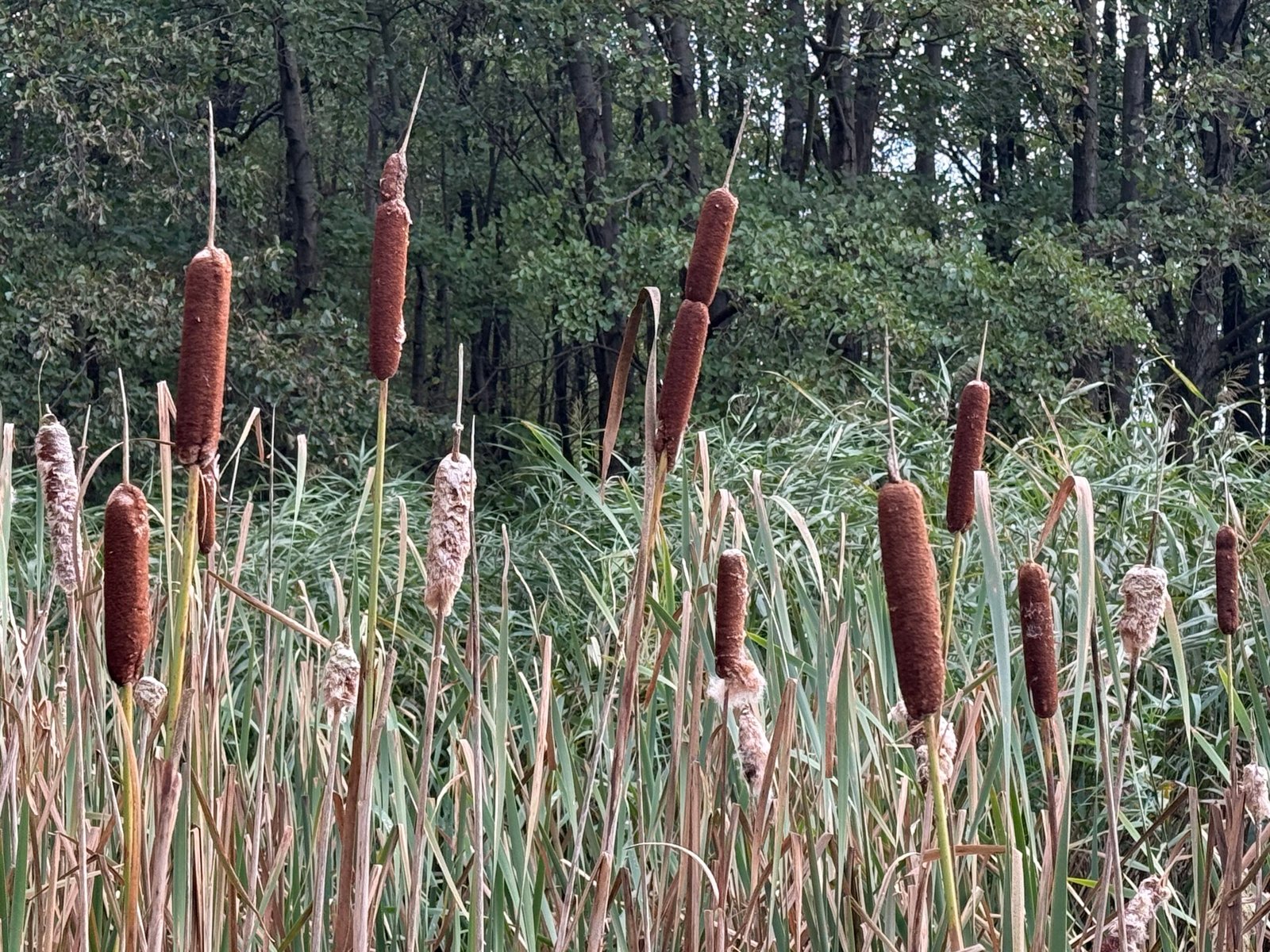
The seasonal collecting campaign for VISION continues — this time with cattail (Typha sp.), a wetland plant whose starch-rich rhizomes provide an excellent material for experiments on prehistoric plant processing.
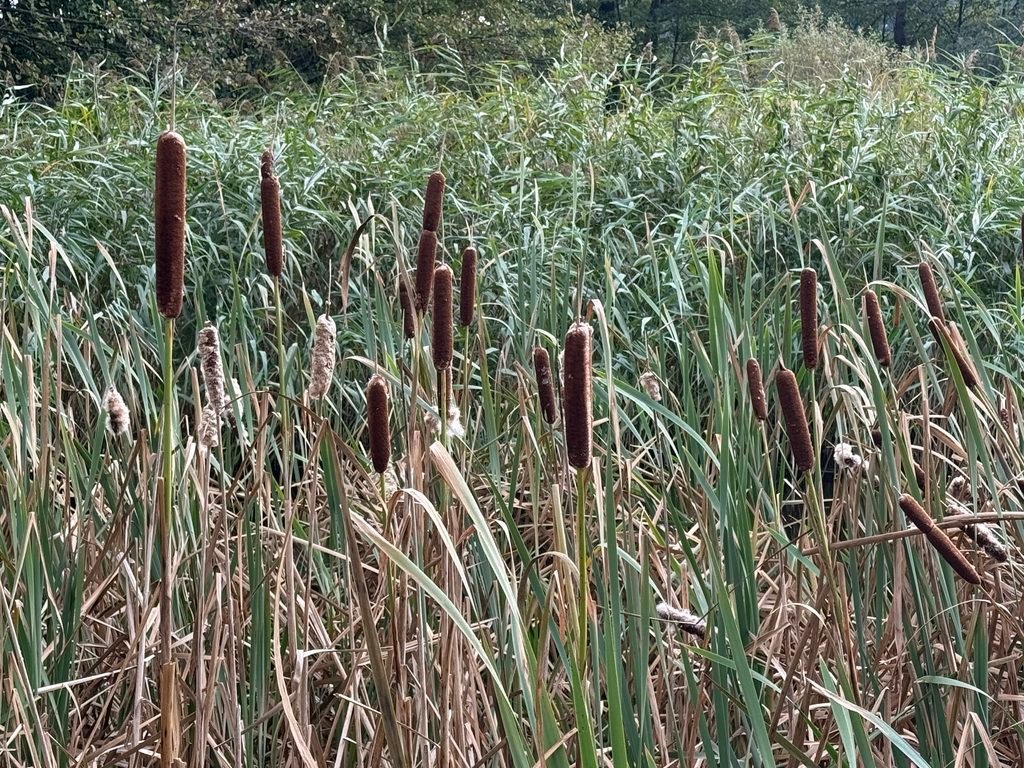
Cattail is particularly interesting because its underground parts store substantial amounts of starch and can be transformed through a series of different processing steps. For VISION, the collected rhizomes will be used to investigate how activities such as pounding, grinding, drying, boiling and roasting may affect the microscopic plant residues left on stone surfaces.
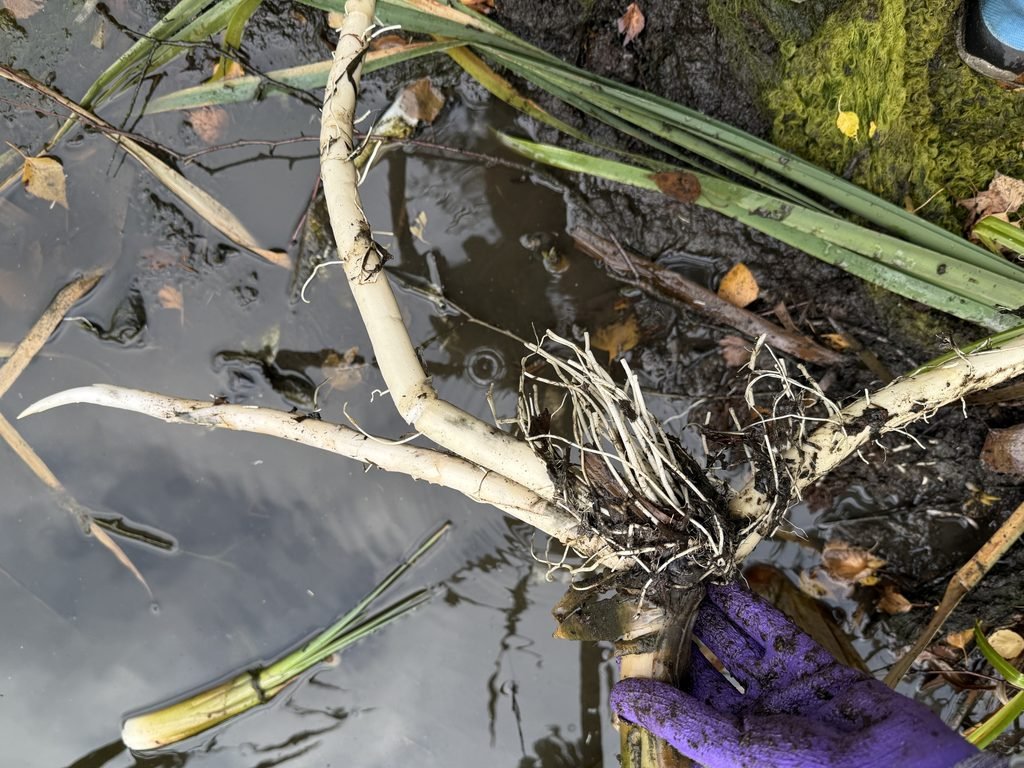
Cattail is also directly relevant to the environmental context of VISION. At the Mesolithic site of Paliwodzizna 29, palaeoenvironmental analyses documented Typha latifolia in the lakeshore vegetation. Pollen evidence indicates that cattail was abundant during the early Preboreal, while sedimentary ancient DNA also records Typha latifolia among the plants forming reed-bed communities around the lake. This does not in itself demonstrate that cattail was processed by the Mesolithic inhabitants of Paliwodzizna, but it shows that the plant was locally available within the environment they occupied (Osipowicz et al., 2023).
The potential importance of starch-rich roots, rhizomes and tubers in Mesolithic subsistence has been increasingly recognised through archaeobotanical research. Kubiak-Martens (2016), in particular, highlighted the role of underground storage organs as a potentially significant component of Mesolithic plant-food economies and the value of microscopic analysis for identifying their remains.
The archaeological history of cattail reaches even further back. Starch grains attributed to Typha have been identified on grinding tools from the Upper Palaeolithic site of Bilancino II in Italy, where the processing of starch-rich rhizomes has been interpreted as part of the preparation of plant foods, potentially including flour-like products (Revedin et al., 2010).
How do pounding and grinding fibrous rhizomes differ in the traces they leave on stone? Does boiling or roasting change the appearance of starch grains and plant tissues? And which residues survive after different stages of processing?
VISION experiments will explore these questions by processing cattail rhizomes in different states and documenting the resulting traces microscopically. The experiments will contribute both to the project’s use-wear reference collection and to a growing comparative database of plant residues.
Reference collections of this kind are particularly important because starch grains and other plant microremains may be modified by mechanical processing, heating and other preparation techniques. Experimental reference material therefore provides a crucial basis for assessing not only which plants may have been processed, but also how different preparation methods may have altered the microscopic evidence that survives on archaeological tools.
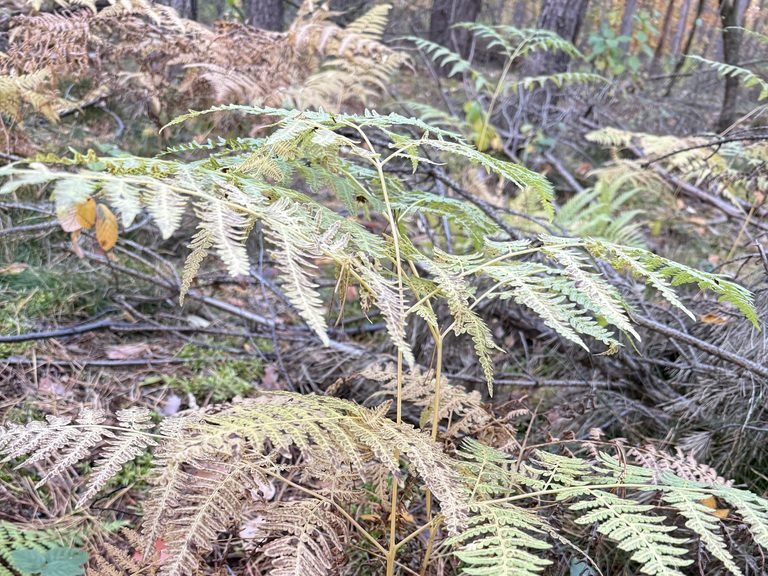
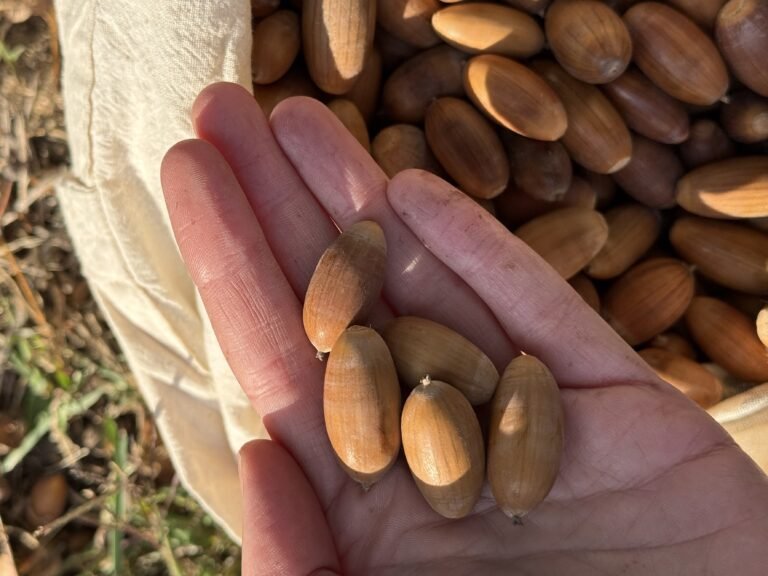
Together with acorns, hazelnuts and other roots, rhizomes and tubers collected this autumn, cattail will form part of a broader experimental programme investigating the role of macrolithic tools in Mesolithic plant processing.
References
Kubiak-Martens, L. (2016). Scanning electron microscopy and starchy food in Mesolithic Europe: the importance of roots and tubers in Mesolithic diet. In K. Hardy & L. Kubiak-Martens (Eds.), Wild Harvest: Plants in the Hominin and Pre-Agrarian Human Worlds (pp. 113–134). Oxford: Oxbow Books.
Osipowicz, G., Badura, M., Brown, T., Hudson, S. M., Jankowski, M., Makowiecki, D., Noryśkiewicz, A. M., Orłowska, J., Sykuła, M., & Weckwerth, P. (2023). Human-environment interactions in the Mesolithic – The case of site Paliwodzizna 29, a lakeside site in central Poland. Quaternary Science Reviews, 322, 108388. https://doi.org/10.1016/j.quascirev.2023.108388
Revedin, A., Aranguren, B., Becattini, R., Longo, L., Marconi, E., Mariotti Lippi, M., Skakun, N., Sinitsyn, A., Spiridonova, E., & Svoboda, J. (2010). Thirty thousand-year-old evidence of plant food processing. Proceedings of the National Academy of Sciences, 107(44), 18815–18819. https://doi.org/10.1073/pnas.1006993107