Collecting bracken rhizomes for VISION experiments
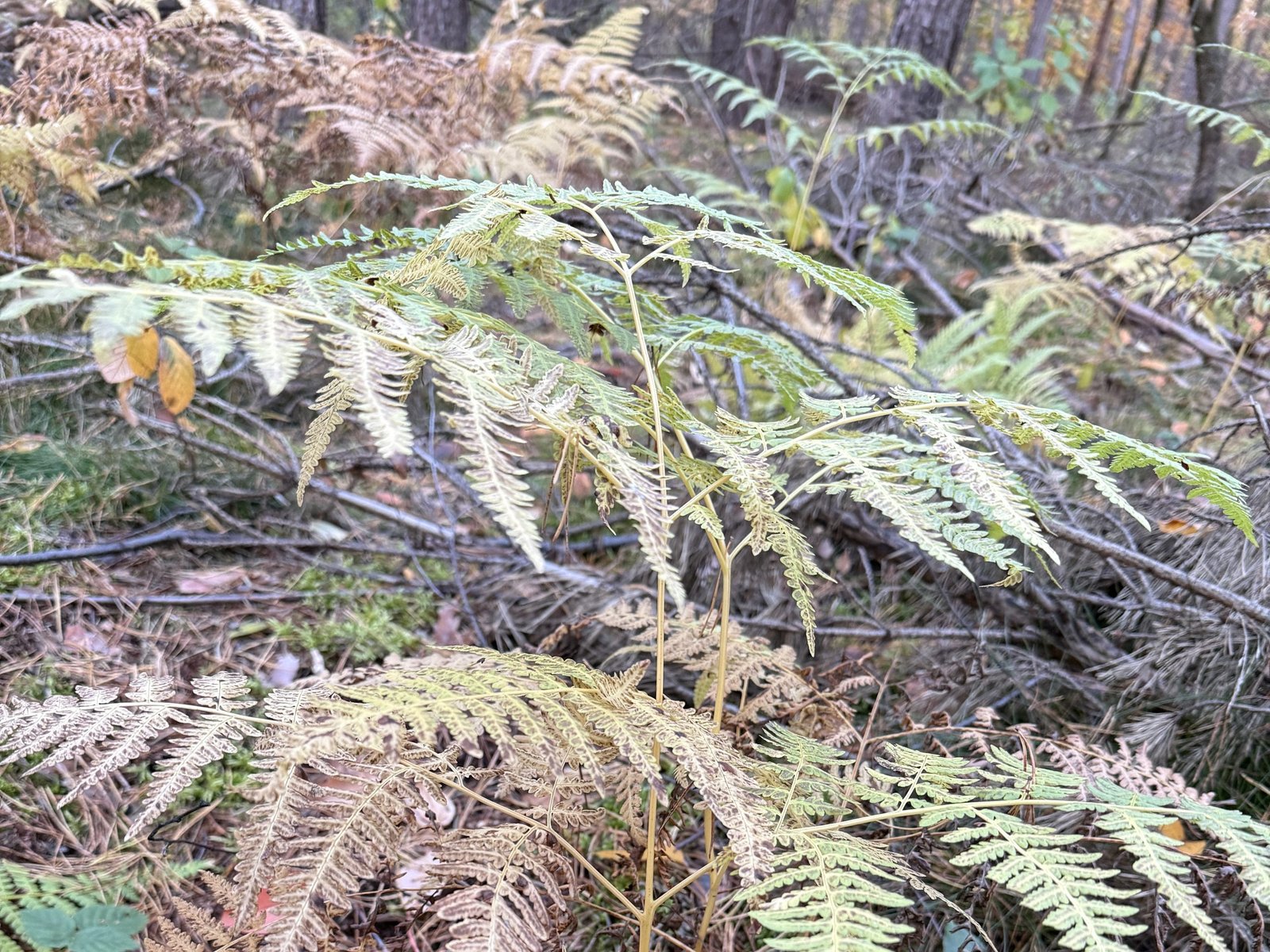
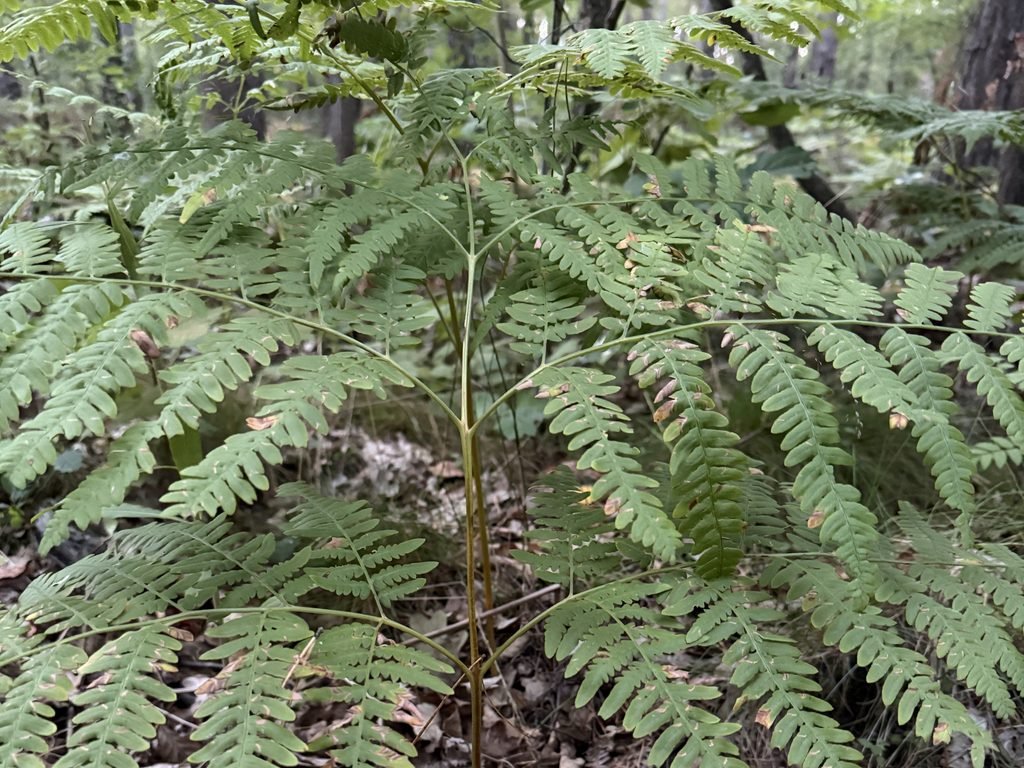
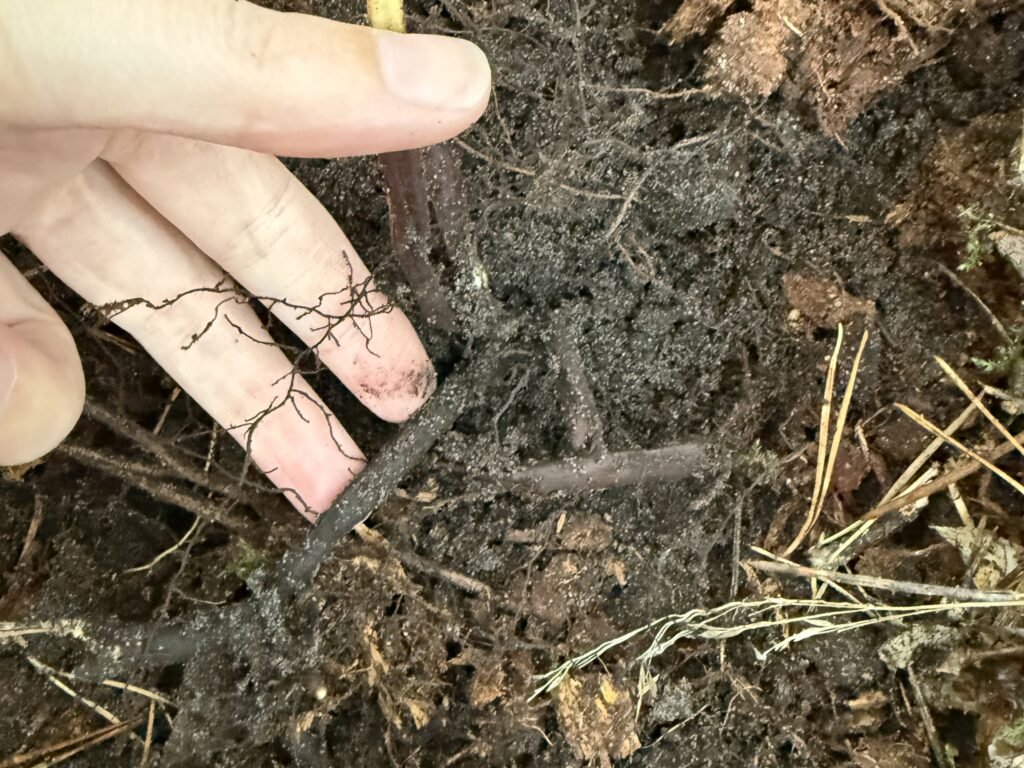
Autumn plant collecting continues as part of the VISION project’s experimental research programme. This time, the focus is on bracken fern (Pteridium aquilinum), a widespread European species whose underground rhizomes contain starch-rich tissues embedded within a tough, fibrous structure.
These characteristics make bracken particularly interesting for investigating prehistoric plant-processing techniques and the microscopic traces they may have left on stone tools.
Archaeological and ethnographic background
Evidence from Mesolithic Europe suggests that bracken rhizomes may have been among the plant resources exploited by prehistoric hunter-gatherers. At Hattemerbroek in the Netherlands, Kubiak-Martens (2008) identified charred remains of Pteridium aquilinum rhizomes using scanning electron microscopy (SEM). Some were recovered from Late Mesolithic contexts, although individual remains also yielded younger radiocarbon dates. These findings demonstrate the archaeological preservation of bracken tissues and their potential importance for reconstructing plant-processing activities.
Bracken is also relevant to one of VISION’s principal research sites, Paliwodzizna 29 in central Poland. Palaeoenvironmental investigations revealed the presence of bracken spores in the palynological record from the Boreal period onwards (Osipowicz et al., 2023). Although this does not directly demonstrate human exploitation, it confirms that the plant was present in the local environment and represents a potential resource available to Mesolithic communities.
Ethnographic evidence provides further insights into its processing. Among Indigenous communities of the Pacific Northwest, including Coast Salish groups, bracken rhizomes were traditionally roasted and pounded to separate their starchy components from tough fibres (Kubiak-Martens, 2008; Divišová and Šída, 2015).
A particularly interesting comparison comes from Māori communities in New Zealand, where the rhizomes of a related species, Pteridium esculentum, known as aruhe, were processed using wooden pounders (patu aruhe) and stone anvils. Microscopic remains of bracken starch and vascular tissues have also been identified in archaeological coprolites from Kohika (Horrocks et al., 2004).
Within VISION, the collected rhizomes will be used to investigate how the mechanical processing of fibrous, starch-bearing plant materials affects stone-tool surfaces.
The collected bracken rhizomes represent another step towards reconstructing the potentially diverse functions of macrolithic stone tools used by Mesolithic hunter-gatherer-fisher communities.
References
- Divišová, M., Šída, P., 2015. Plant use in the Mesolithic period. Archaeobotanical data from the Czech Republic in a European context – a review. Interdisciplinaria Archaeologica – Natural Sciences in Archaeology 6(1), 95–106. https://doi.org/10.24916/iansa.2015.1.7
- Horrocks, M., Irwin, G., Jones, M., Sutton, D., 2004. Starch grains and xylem cells of sweet potato (Ipomoea batatas) and bracken (Pteridium esculentum) in archaeological deposits from northern New Zealand. Journal of Archaeological Science 31(3), 251–258. https://doi.org/10.1016/S0305-4403(03)00018-9
- Kubiak-Martens, L., 2008. Voedseleconomie: parenchym en andere plantaardige macroresten (Hanzelijn Oude Land – Knooppunt Hattemerbroek). BIAXiaal 386. Full report
- Osipowicz, G., et al., 2023. Human-environment interactions in the Mesolithic – The case of site Paliwodzizna 29, a lakeside site in central Poland. Quaternary Science Reviews 322, 108388. https://doi.org/10.1016/j.quascirev.2023.108388
- Leach, F., et al., 2023. The New Zealand bracken fern rhizome, Pteridium esculentum (G.Forst): a toxic food plant of pre-European Māori. Archaeology in Oceania 58(2), 135–171. https://doi.org/10.1002/arco.5285